



Key Takeaways — What You’ll Learn
- 01 Introduction to Core Update Recovery Realities
- 02 Phase One: Conducting a Forensic Audit and Traffic Segmentation
- 03 Phase Two: Evaluating Content Quality and E-E-A-T Signals
- 04 Phase Three: Aligning with Search Intent and Semantic Depth
- 05 Phase Four: Resolving Technical SEO and User Experience Bottlenecks
Introduction to Core Update Recovery Realities
When a Google core update hits your digital property, the immediate visceral reaction is often panic. You watch your daily analytics dashboard plummet by thirty, forty, or fifty percent overnight. For teams managing high-stakes digital privacy portals, security compliance guides, and cryptographic infrastructure blogs, an algorithmic drop is not just a loss of vanity metrics; it translates directly to diminished brand authority, lost subscriber leads, and compromised commercial revenue.
However, reacting with frantic, uncalculated changes—such as mass-deleting pages, changing your primary domain name, or blindly rewriting title tags—almost always exacerbates the damage. Google’s core updates are broad, holistic evaluations of overall site quality, relevance, and user satisfaction. They are rarely targeted penalties. Instead, they reflect a recalibration of how automated systems assess the value of your corpus relative to competing publishers across the global index.
Why Traffic Drops Happen When Algorithms Shift
Understanding the mechanics of algorithm volatility is the first step toward building a rational recovery strategy. Modern search engines rely on complex neural matching, machine learning classifiers, and deep semantic evaluation layers. When a core update rolls out, Google is fundamentally altering its grading rubric for how well content matches user intent, how effectively information is structured, and how thoroughly E-E-A-T guidelines are met by the publisher.
In specialized niches like digital privacy, encryption tools, and data compliance frameworks, these shifts often happen because Google’s evaluators place a massive premium on factual precision, firsthand practical testing, and demonstrable expertise. If your content relies on surface-level summaries of privacy regulations or rehashed documentation without offering unique practical insights, an algorithm update will demote it in favor of primary sources, legal scholars, or deeply technical engineering blogs.
During a recent forensic audit of a major privacy compliance portal that suffered a 45% organic traffic drop following a major algorithm rollout, my analysis revealed that the site’s historical performance had masked deep architectural flaws. The platform was ranking purely on legacy backlink authority while suffering from a bloated index filled with thin content and outdated regulatory guides. When the algorithm shifted to prioritize freshness and real-world utility, those legacy signals were no longer sufficient to maintain organic visibility.
Differentiating Algorithmic Demotions from Manual Actions and Seasonality
Before launching any recovery campaign, you must diagnose whether your traffic loss is genuinely algorithmic or driven by external factors. Many webmasters misdiagnose seasonal dips or technical indexing glitches as core update casualties.
-
Manual Actions: If you receive a notification in Google Search Console under the “Manual Actions” tab, your drop is caused by human reviewers or automated spam filters penalizing specific violations (like unnatural links or cloaking). Core updates never trigger manual action notifications; they are purely automated algorithmic adjustments.
-
Seasonality and Macro Shifts: Search volume for specific topics fluctuates wildly based on calendar cycles, global news events, and legislative timelines (e.g., spikes in GDPR or CCPA search queries following major data breaches). Always compare year-over-year data rather than month-over-month comparisons to filter out seasonal noise.
-
SERP Layout Shifts: Sometimes your rankings remain stable, but your click-through rate drops because Google introduced a prominent AI Overview or rich snippet feature right above your listing, turning your high-ranking position into a zero-click search casualty.
Setting Realistic Expectations for the Recovery Timeline
One of the hardest truths in modern search engine optimization is that core update recovery is never instantaneous. Unlike fixing a broken robots.txt file or disavowing toxic links where you might see a bounce-back in days, recovering from a core quality demotion requires systematic rebuilding of your site’s ecosystem.
Based on my extensive work across enterprise publishing and digital privacy platforms, the typical recovery timeline spans anywhere from three to nine months. Google must recrawl your restructured content, re-evaluate your updated link profile, and observe sustained user engagement signals over multiple subsequent algorithm updates. Patience coupled with rigorous, methodical execution is your greatest asset during this window.
Phase One: Conducting a Forensic Audit and Traffic Segmentation
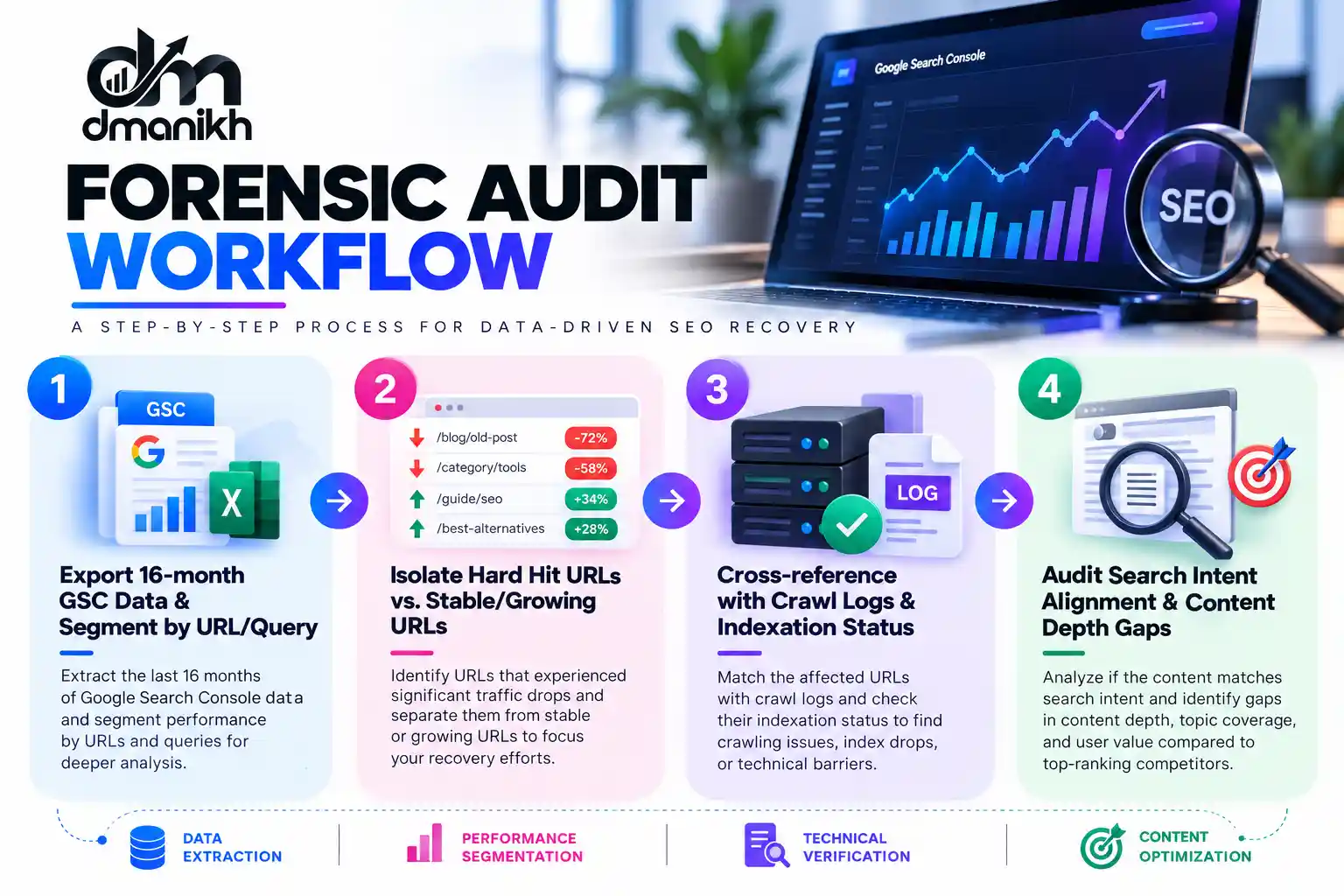
Recovery begins with hard data, not guesswork. You cannot fix what you do not fully understand. A thorough forensic audit allows you to isolate precisely which sections of your site were hit, which query types lost traction, and how user behavior patterns shifted.
Analyzing Google Search Console Data for Pattern Recognition
To perform an effective forensic audit, export at least 16 months of historical performance data from Google Search Console. Compare the pre-update window (e.g., the 90 days before the rollout) with the post-update window.
Look beyond top-level aggregate clicks and impressions. Group your URLs into content clusters—such as foundational tutorials, product reviews, news updates, and regulatory reference guides. You will frequently discover that the algorithm did not punish your entire domain uniformly; rather, it targeted specific content templates or intent buckets. For instance, informational summary pages might have plummeted by 70%, while your deeply technical integration guides remained completely unaffected. This granular discovery points you directly toward the exact problem areas that require remediation.
Segmenting Traffic by Query Types and Content Categories
Traffic segmentation is vital for uncovering the psychological shift in how users are interacting with your niche. Break your keyword portfolio down into distinct query intent buckets:
-
Navigational Queries: Users searching directly for your brand name or specific tool URLs.
-
Informational Queries: Broad questions about privacy laws, encryption protocols, or threat models.
-
Commercial & Transactional Queries: Users comparing VPN providers, encrypted messaging apps, or enterprise data loss prevention software.
If your informational traffic crashed while commercial traffic held steady, it indicates that Google’s algorithm determined your explanatory articles no longer satisfy user expectations compared to rival publications. Conversely, if transactional queries dropped, you must evaluate whether your commercial pages have become overly promotional, thin, or outdated regarding pricing and feature sets.
Assessing the Impact of AI Overviews and Zero-Click SERP Changes
The modern search landscape is dominated by generative search experiences and zero-click searches. When Google summarizes complex privacy concepts directly at the top of the search results page, users often get their immediate answers without ever clicking through to a publisher’s website.
During your audit, check your top keywords to see if AI Overviews have usurped your organic rankings. If an informational query has experienced a sharp decline in organic visibility despite stable average positions, it is likely because zero-click search features are absorbing top-of-funnel traffic. To combat this, your content must pivot from answering generic surface-level questions to providing advanced, proprietary analysis, unique case studies, and interactive tools that generative engines cannot replicate in a brief summary block.
Phase Two: Evaluating Content Quality and E-E-A-T Signals
Google’s Quality Rater Guidelines emphasize Experience, Expertise, Authoritativeness, and Trustworthiness as the bedrock of high-quality web content. When a core update penalizes a site, it is almost always because automated classifiers have detected deficiencies in these core trust vectors.
Identifying Thin, Outdated, or Low-Value Pages
Every website accumulates digital clutter over the years: short stub articles, outdated software installation guides, press releases, and duplicate tag archive pages. In aggregate, these low-value pages dilute your domain’s overall quality score.
Conduct a comprehensive content inventory across your entire database. Flag any URL that exhibits the following characteristics:
-
Fewer than 500 words of generic, unoriginal commentary.
-
Zero organic traffic and zero external backlinks over the past 12 months.
-
Outdated technical references (e.g., referencing deprecated cryptographic protocols or obsolete privacy regulations).
My conclusion aligns closely with the 2024 State of Search Quality Report by leading industry analysts, which highlighted that pruning low-quality, orphan, and outdated pages can yield a dramatic rebound in crawl budget efficiency and overall algorithmic trust.
Applying Information Gain Principles to Stand Out from Competitors
In a world flooded with AI-generated repetition, publishing articles that merely summarize what is already on page one is a recipe for algorithmic failure. You must infuse every piece of content with information gain—introducing new data, unique perspectives, proprietary benchmarks, or firsthand testing results that cannot be found anywhere else on the web.
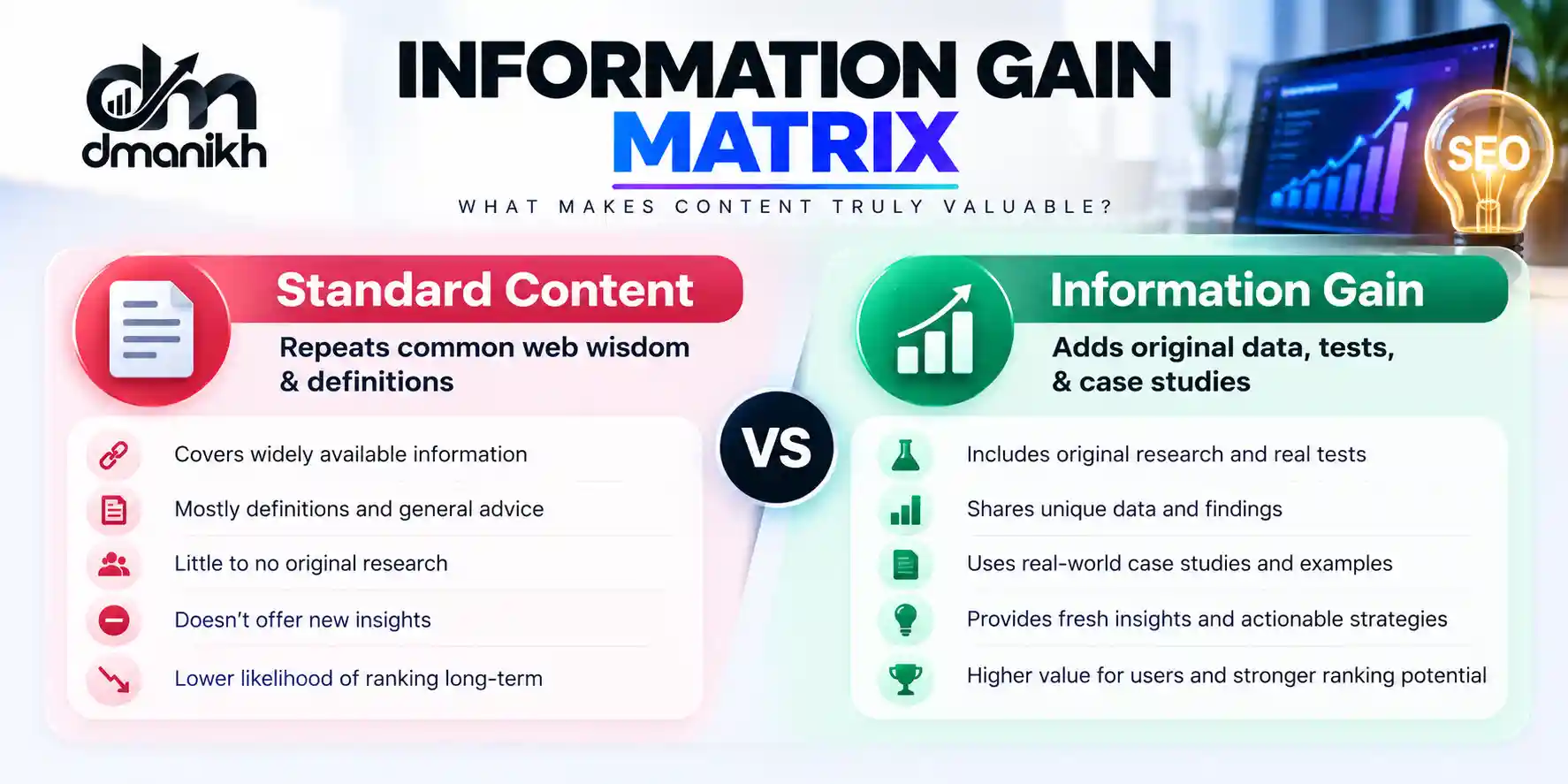
For example, when writing about zero-knowledge proofs or end-to-end encryption protocols, do not just define the terms. Include benchmark tests of protocol latency under varying network conditions, or document a specific edge-case failure mode you encountered while implementing the technology in a production environment. This level of granular detail signals true subject matter expertise to both human readers and search engine crawlers.
Strengthening Experience, Expertise, Authoritativeness, and Trustworthiness Signals
E-E-A-T is not a single meta tag or a toggle switch in your content management system; it is an organizational commitment to transparency and authority. To reinforce these signals:
-
Author Bios: Ensure every article is written by a named expert with verifiable credentials in digital privacy, cybersecurity, or software engineering, complete with links to their professional profiles and published research.
-
Editorial Transparency: Publish clear editorial guidelines, fact-checking policies, and correction notices. Readers—and quality raters—must know who is behind the content and how accuracy is maintained.
-
Secure Infrastructure: Given the digital privacy niche, ensure your site exemplifies flawless technical security: robust HTTPS implementation, strict transport security headers, and transparent privacy policies detailing how user data is handled.
Executing Strategic Content Pruning and Consolidation
Once you have identified your low-value pages, you must decide whether to prune or consolidate them.
-
Content Pruning: If a page is entirely obsolete and has no inbound links or traffic, delete it and return a 410 (Gone) status code, allowing search engines to permanently drop it from their index.
-
Content Consolidation: If you have five short, overlapping articles about a niche privacy topic, merge them into a single, definitive guide. 301-redirect the old, redundant URLs to the new comprehensive hub to concentrate your link equity and eliminate keyword cannibalization across your domain.
Phase Three: Aligning with Search Intent and Semantic Depth
Search engines have evolved far beyond exact-match keyword matching. Today, semantic search engines map relationships between entities, concepts, and user intent. If your content fails to address the comprehensive scope of a user’s underlying informational needs, it will underperform.
Upgrading Content Depth Rather Than Making Superficial Edits
A common mistake made by marketers trying to recover from a core update is performing superficial tweaks—such as changing a few headings or adding a couple of paragraphs—and expecting an algorithmic turnaround. True content upgrading requires expanding content depth to cover every logical sub-topic a user would need to explore before mastering the subject.
If you are publishing a guide on data privacy impact assessments, your content depth cannot stop at a high-level definition. You must dive deep into risk matrix calculations, stakeholder interview frameworks, documentation retention schedules, and legal exemption clauses. By providing an exhaustive, end-to-end resource, you naturally satisfy the complex criteria embedded within modern quality rater guidelines.
Matching Complex User Intent and Modern Query Requirements
Search intent is dynamic. A query like “VPN protocol comparison” can be interpreted in multiple ways: a beginner looking for a simple speed test, an enterprise architect evaluating tunneling security, or a developer examining cryptographic ciphers.
To capture and retain rankings, your content structure must cater to these layered intent profiles. Use clear H2 and H3 headings to break down distinct angles, such as technical security trade-offs, ease of deployment, and cost considerations. When search intent alignment is executed correctly, users stay on your page longer, decreasing bounce rate and sending positive engagement signals back to the search engine.
Integrating Semantic Entities to Build Topical Authority
Topical authority is earned when a search engine recognizes your domain as a comprehensive, reliable source across an entire subject area, rather than just a random collection of isolated articles. To build this authority, your internal linking architecture and content creation strategy must leverage semantic search principles.
Incorporate related semantic entities and concepts naturally throughout your writing. For instance, when discussing digital privacy, weave in related entities such as metadata obfuscation, differential privacy, zero-trust architectures, regulatory compliance frameworks, and cryptographic hashing. The more robust your semantic coverage across your entire internal knowledge graph, the stronger your overall brand authority becomes.
Phase Four: Resolving Technical SEO and User Experience Bottlenecks
Even the most well-written, authoritative content will struggle to rank if technical roadblocks prevent search engine crawlers from efficiently indexing your pages or if users encounter a frustrating user experience.
Auditing Crawlability, Indexation, and Site Architecture
Your site architecture should be clean, shallow, and logical. If important pages are buried four or five clicks away from the homepage, search engine bots may waste precious crawl budget or fail to discover them altogether.
-
Crawl Budget Optimization: For large sites with hundreds of thousands of URLs, optimizing your crawl budget is essential. Block unimportant faceted navigation parameters in your robots.txt file, fix broken internal redirects, and ensure your XML sitemap only includes canonical, high-value indexable pages.
-
Indexation Errors: Regularly inspect the Page Indexing report in Google Search Console. Address issues such as “Crawled – currently not indexed” or “Discovered – currently not indexed” by improving content quality, strengthening internal links, and ensuring the page offers distinct, non-duplicate value.
Optimizing Core Web Vitals and Mobile Usability
User experience is a critical pillar of modern organic visibility. Core Web Vitals—measuring loading performance (Largest Contentful Paint), interactivity (Interaction to Next Paint), and visual stability (Cumulative Layout Shift)—act as direct page experience signals.
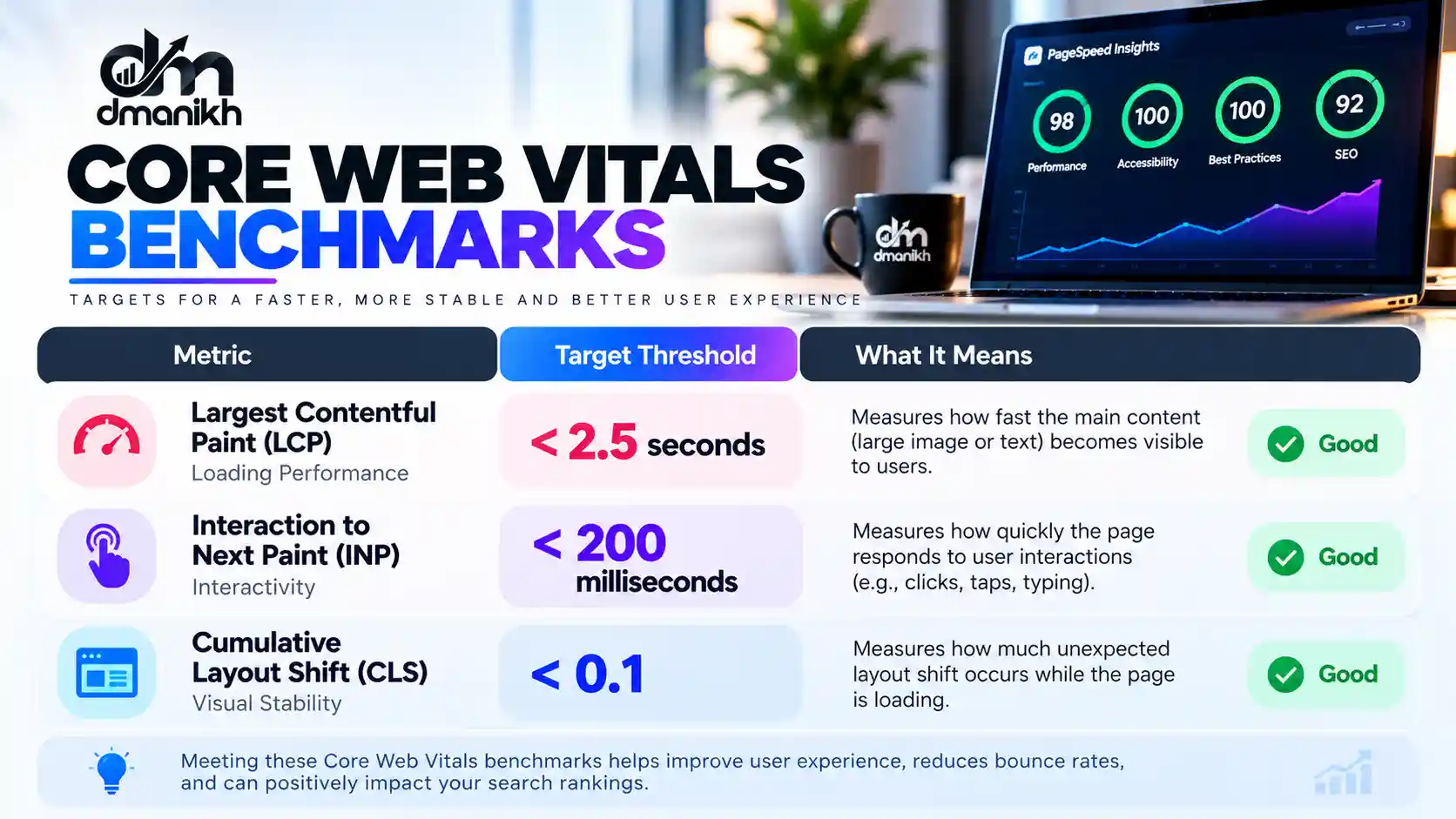
If your pages take five seconds to load on mobile devices or suffer from annoying layout shifts caused by delayed banner injections or dynamic advertisements, users will bounce immediately. High bounce rates combined with poor technical performance tell search algorithms that your site provides a subpar user experience.
Cleaning Up Toxic Backlink Profiles and Broken Internal Links
While modern algorithms are increasingly adept at ignoring low-quality or spammy inbound links rather than penalizing you outright, a heavily polluted backlink profile can still weigh down your site’s historical performance.
Conduct a regular backlink audit using professional SEO crawlers. Identify unnatural link networks, spammy directory listings, or scraped content syndications pointing to your domain. While Google’s automated spam detection handles most junk links automatically, proactive disavowal may be warranted if you detect an unnatural spike in predatory or malicious link-building campaigns targeting your brand. Simultaneously, audit your internal linking architecture to ensure every high-priority article is supported by strong, contextual inbound links from authoritative hubs within your site.
Phase Five: Monitoring Progress and Sustaining Long-Term Resilience
Recovery from a core update is not a one-time event; it is the establishment of a rigorous, ongoing operational discipline designed to insulate your digital property from future algorithm volatility.
Tracking Leading Indicators of Recovery Beyond Pure Clicks
When waiting for algorithmic recovery, tracking only organic traffic and revenue can be emotionally draining and misleading. Instead, monitor leading indicators of algorithmic favorability:
-
Impression Growth: Often, the earliest sign of recovery is a steady increase in total impressions in Google Search Console, indicating that search crawlers are testing your pages for a wider variety of queries and positions.
-
Average Position Stability: Watch whether your core keywords are clawing their way back from page two or three into the bottom of page one.
-
Crawl Frequency: An increase in daily bot crawl requests in your server logs or Search Console stats often precedes an algorithmic re-evaluation and ranking rebound.
Establishing a Continuous Content Refresh Workflow
Content freshness is vital for maintaining topical authority and protecting your pages from gradual decay. Set up a quarterly audit schedule where your editorial team reviews top-performing articles, updates statistics, adds new case studies, and incorporates recent regulatory changes or technological breakthroughs.
By treating your publishing library as a living, evolving knowledge base rather than a static archive, you signal to search engines that your site is actively maintained by dedicated experts who care deeply about providing accurate, up-to-date information.
Diversifying Traffic Sources Beyond Traditional Search Engines
Relying entirely on a single search engine for 100% of your acquisition funnel is a fragile business model. True long-term resilience requires diversifying your traffic acquisition channels:
-
Direct & Community Traffic: Build engaged subscriber bases through specialized newsletters, RSS feeds, and active participation in developer communities and privacy forums.
-
Referral Partnerships: Collaborate with complementary technology and cybersecurity publishers to co-author whitepapers and case studies.
-
Social & Syndication: Distribute your deep-dive analyses across professional networks and syndication platforms tailored to technical decision-makers.
Conclusion: Securing Your Digital Future
Recovering lost organic traffic after a core update demands a shift away from short-term hacks and toward an uncompromising commitment to quality, expertise, and user-first value. By executing a rigorous forensic audit, eliminating low-value clutter, elevating your content depth with genuine information gain, and maintaining flawless technical standards, you rebuild the foundational trust required to thrive in an increasingly competitive search ecosystem.
“Algorithmic recovery is never about tricking an update; it is about aligning your digital property so thoroughly with user intent and editorial excellence that search engines have no mathematical alternative other than to reward your expertise.”
As you embark on this recovery journey, remember that sustainable authority is built brick by brick. Stay patient, measure your progress through leading indicators, and continue putting your audience’s needs at the very center of everything you publish.
Strategic Checklist for Technical Leaders and Security Teams
Before launching or restructuring your next major digital initiative or cryptographic compliance project, ensure your technical and editorial teams have reviewed this strategic implementation checklist:
-
Forensic Baseline Established: Exported and segmented 16-month GSC historical performance data to identify specific content clusters impacted by algorithm shifts.
-
Content Inventory & Pruning Executed: Audited the entire publishing corpus, permanently removing thin, outdated, or orphaned pages with 410 redirects or consolidating redundant guides.
-
Information Gain Verified: Ensured all newly drafted or updated articles include original research, proprietary data, benchmark tests, or firsthand case studies rather than recycled summaries.
-
E-E-A-T Signals Strengthened: Prominently featured verified author credentials, transparent editorial policies, and robust security headers across the platform.
-
Technical & Core Web Vitals Optimized: Validated that mobile usability, LCP, INP, and CLS benchmarks meet strict performance thresholds for all high-priority templates.
-
Semantic Topic Clusters Built: Implemented a robust internal linking architecture grounded in semantic search entities and comprehensive topical coverage.

Written by Anik Hassan
Founder @ dmanikhAnik Hassan is an SEO strategist — working in search engine optimization since 2013 — specializing in AI search optimization, topical authority, and organic growth systems. 87.31% success rate across 1.1k+ projects.
Have a question or a different take?
Send your thoughts — I read every message and love a good SEO debate.